El Salvador: More Than Pupusas — A World of Cuisine to Discover
Seafood, mountain coffee, market food and a new fine-dining scene.
When people hear "Salvadoran food," one dish usually comes to mind first: pupusas.
And for good reason.
Pupusas are one of the most beloved symbols of El Salvador — a simple, comforting dish deeply connected to the country's culture and everyday life.
But if you think Salvadoran cuisine begins and ends with pupusas, there is an entire world waiting to be discovered.
From sophisticated dining and contemporary cuisine to fresh seafood, mountain coffee, traditional markets, local specialties, and unforgettable meals in small towns, El Salvador offers a surprisingly diverse food experience.
A Cuisine Rooted in Tradition
Salvadoran cuisine is deeply connected to the country's history and local ingredients.
Corn and beans are fundamental, but the culinary landscape also includes seafood, meats, dairy products, fruits, vegetables, herbs, and locally grown ingredients that change from one region to another.
That regional diversity is one of the most interesting parts of traveling through El Salvador.
A dish you discover in the western highlands can feel completely different from what you experience along the Pacific coast.
And sometimes, the best culinary experiences aren't found in the places with the biggest signs.
They're found along the road.
Beyond Traditional Food: A New Salvadoran Dining Scene
El Salvador is also developing a more sophisticated dining culture.
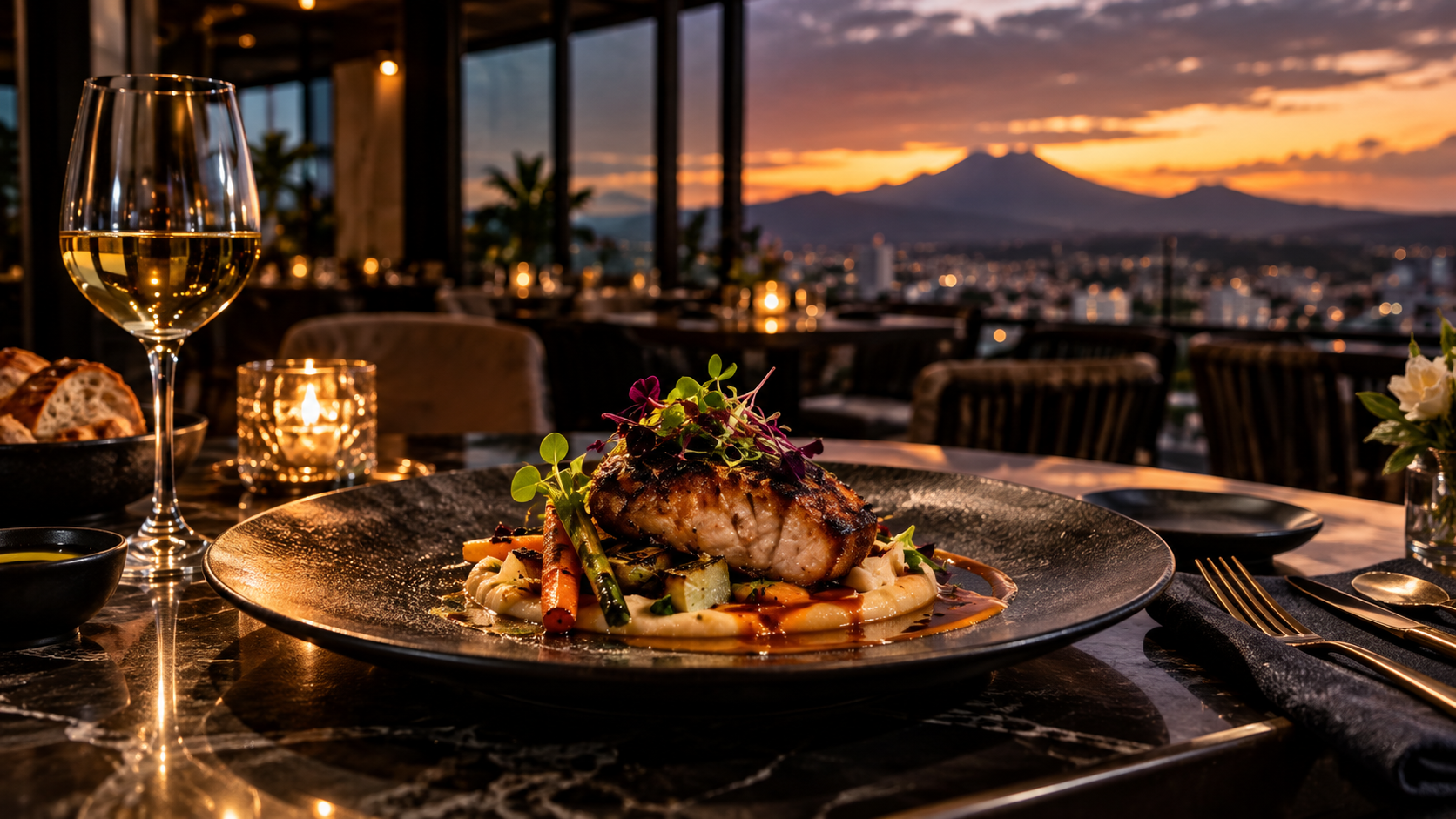
In San Salvador and other major destinations, travelers can find elegant restaurants, contemporary cuisine, international influences, creative presentations, specialty coffee, and dining experiences designed for travelers looking for something more refined.
This is where El Salvador becomes particularly interesting for food lovers.
You can begin the day with a traditional Salvadoran breakfast, enjoy a carefully prepared lunch in the mountains, discover specialty coffee in the afternoon, and finish the evening with an elevated dining experience.
The country gives you the opportunity to experience both sides of its culinary identity:
authentic tradition and modern creativity.
The Flavors of the Coast
With the Pacific Ocean stretching along the country's southern edge, seafood naturally plays an important role in Salvadoran cuisine.
Fresh fish, shrimp, shellfish, ceviche, grilled seafood, and regional preparations offer a completely different culinary experience from the flavors found inland.
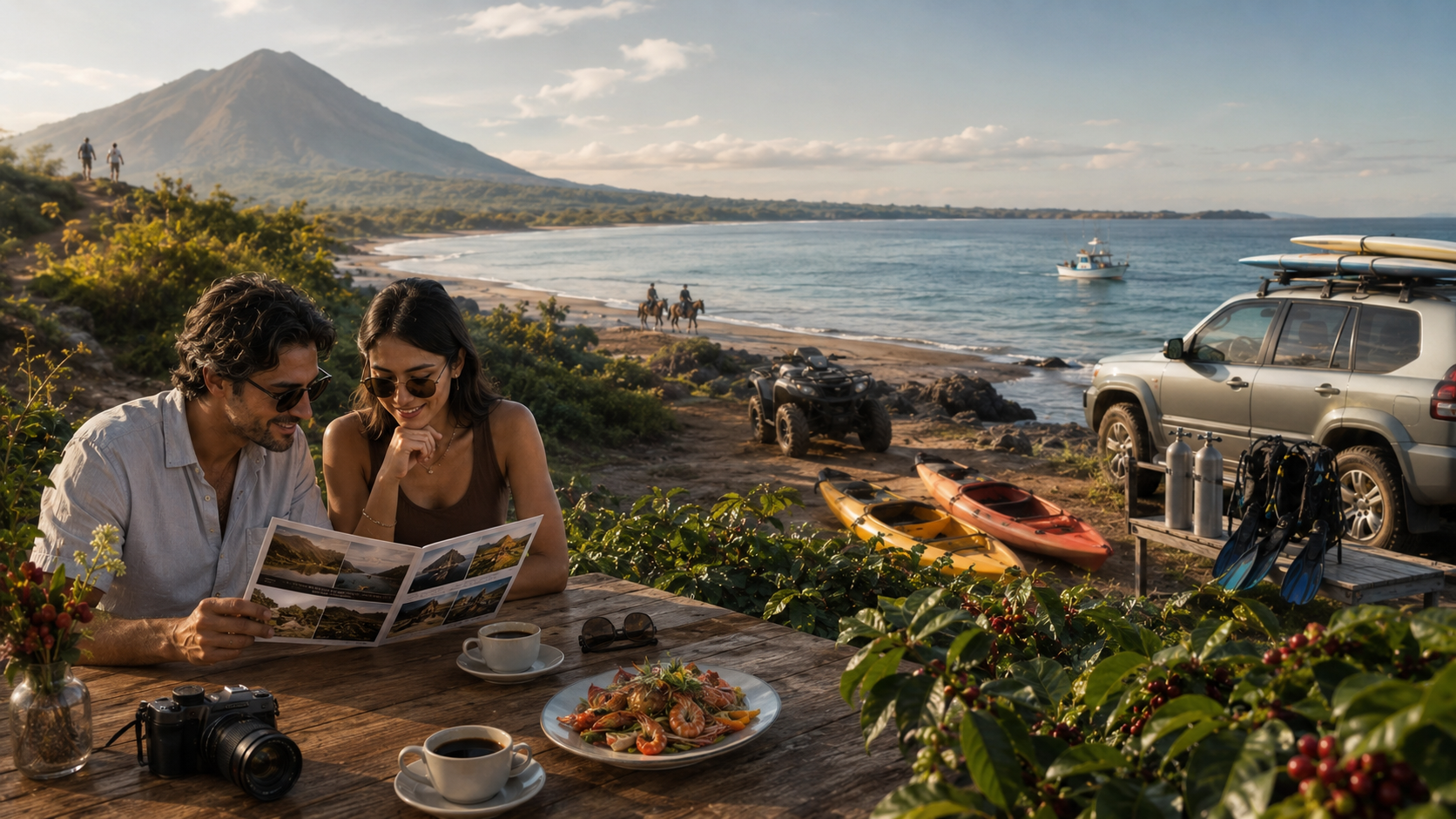
Imagine spending the morning exploring the coast and ending the afternoon with fresh seafood while watching the Pacific sunset.
That is not simply a meal.
It becomes part of the journey.
Coffee Is Part of the Experience
For many visitors, discovering Salvadoran coffee is one of the most memorable parts of traveling through the country's highlands.
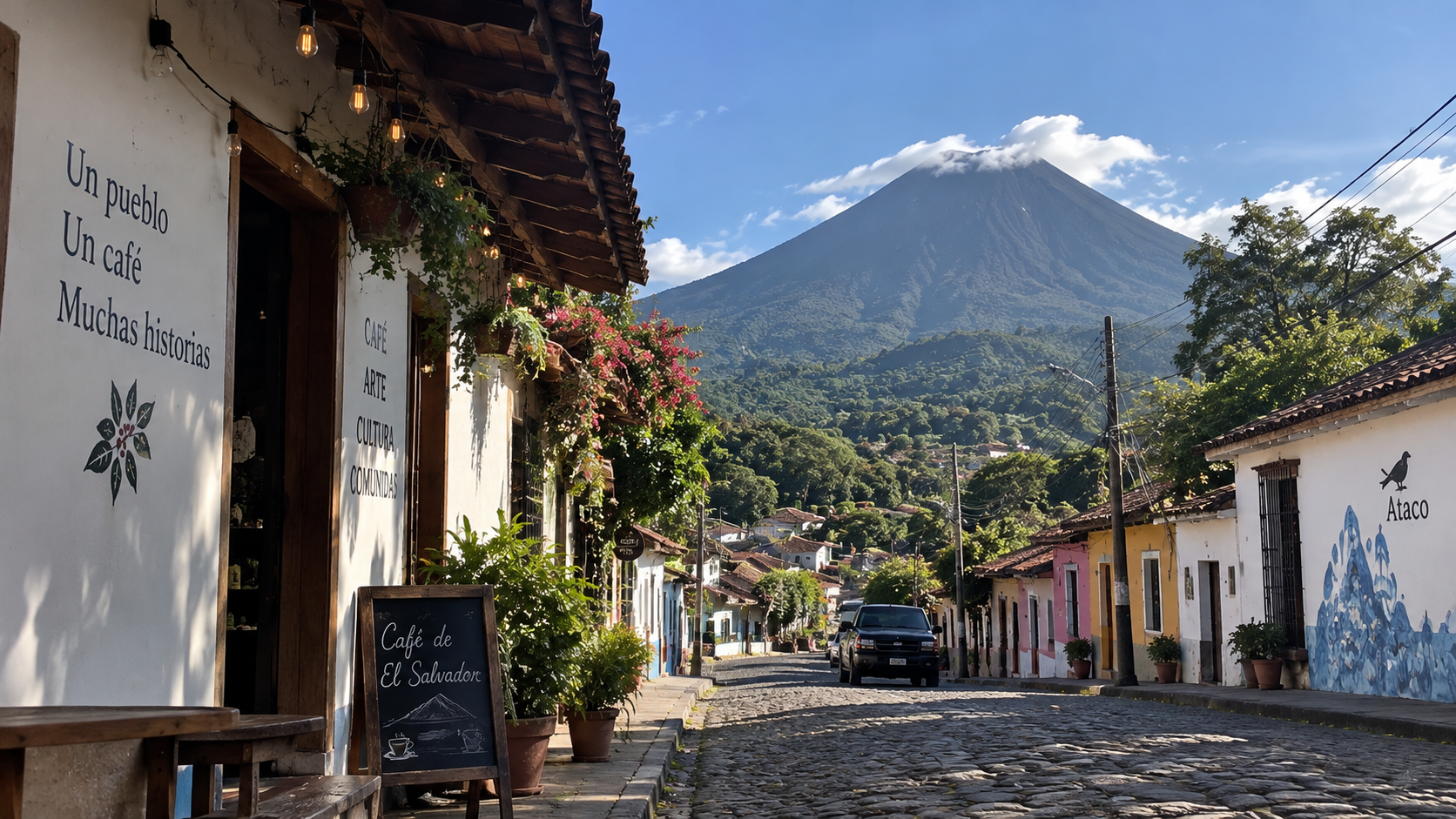
The Ruta de las Flores is particularly interesting for travelers who want to combine food, coffee, nature, and culture.
The route passes through mountain towns surrounded by coffee-growing areas, including Juayúa, Salcoatitán, Apaneca, Concepción de Ataco, and Nahuizalco.
Here, coffee can become an experience rather than simply a drink.
You can visit coffee-growing areas, learn about the process, enjoy the mountain scenery, and taste coffee where it is produced.
And then, naturally, comes the food.
The same region offers traditional dishes, cafés, restaurants, local markets, and increasingly diverse dining experiences.
Small Towns, Big Flavors
One of the best ways to experience Salvadoran cuisine is to leave the major cities behind.
In towns throughout the country, food is closely connected to local traditions and everyday life.
Juayúa, for example, is known for its food offerings, while the towns along the Ruta de las Flores combine local cuisine with coffee, crafts, art, and mountain landscapes.
Elsewhere, different regions have their own specialties and culinary traditions.
The result is a country where a road trip can also become a journey through different flavors.
The Best Meal Is the One That Fits Your Journey
Travel should not feel like a checklist.
Maybe you want a refined restaurant after a day exploring volcanoes.
Maybe you prefer a small local restaurant in a mountain town.
Maybe you want fresh seafood by the ocean.
Maybe coffee is more important to you than dinner.
Or maybe you want a little bit of everything.
That is where a personalized itinerary makes a difference.
Cuisine as Part of Your VIP Tour
At VIP Tours El Salvador, we believe that food should be part of the travel experience — not something you figure out at the last minute.
When we design your itinerary, we can incorporate restaurants, cafés, coffee experiences, local food stops, seafood, fine dining, and other food experiences according to your interests and the destinations you are visiting.
A [private chef](/private-chef-santein-foods) evening, a [private guide](/private-guide-el-salvador) through the coffee towns, and [private transportation](/private-chauffeur) can all be part of the same day.
The idea is simple:
You tell us what you enjoy. We help build the journey around it.
A volcano in the morning.
A charming mountain town for lunch.
A coffee experience in the afternoon.
A beautiful restaurant for dinner.
And everything connected through one personalized itinerary.
Come Hungry. Leave With a Story.
Yes, you should absolutely try pupusas when you visit El Salvador.
But don't stop there.
Taste the seafood.
Discover Salvadoran coffee.
Explore the flavors of the mountains.
Try traditional dishes you've never heard of.
Enjoy contemporary cuisine.
Find a restaurant with a view.
Eat where locals eat.
And allow food to become part of the story you take home.
Because El Salvador is more than pupusas.
It is a world of cuisine waiting to be discovered.
Discover El Salvador Your Way
Whether you're looking for authentic local flavors, fine dining, coffee experiences, coastal cuisine, or a combination of everything, VIP Tours El Salvador can incorporate food experiences into your personalized travel itinerary.
Your journey. Your tastes. Your El Salvador.